Our therapists are CERTIFIED in the Vodder technique of Manual Lymphatic Drainage (MLD) through 40+ hour ACOLS professional education program.
This gentle and slow skin-stretching manual technique reduces inflammation/swelling, bruising and pain following accidents, injuries and surgical procedures. MLD is sometimes called lymphatic massage. Lymphatic work is very useful for lymphedema, lipedema, autoimmune issues, sinus/allergies, headaches, and digestive problems.
Because this manual therapy must proceed at the slow pace of your lymphatic system, 60-minute sessions are only appropriate for specific focus areas such as swelling in one arm, lower body swelling only, headache or sinus relief, etc. If you desire full body results and outcomes you will need a 90 min session.
It is important to eat lightly the evening before and day of your appointment and hydrate very well. Also please limit caffeine. Do not wear deodorant, perfumes/colognes or heavy make-up to your appointment.
Scroll down the page for FAQs.
60 min session = $130 | 90 min session = $170
We do not accept tips. Payment is expected prior to or at the conclusion of your session. We do not bill insurance nor accept reimbursement. We accept credit cards, cash, check or HSA/FSA debit/credit cards. 24-hour cancellation notification is required.
MLD Frequently Asked Questions
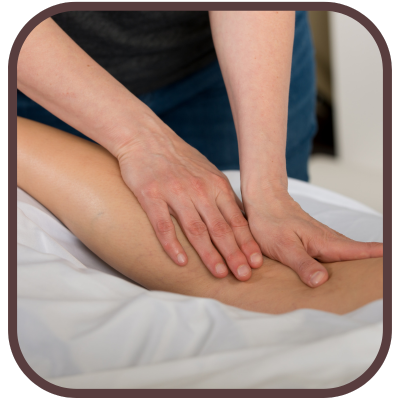
Manual Lymphatic Drainage (MLD) is a gentle, therapeutic technique designed to stimulate the flow of lymph fluid in the body. It is commonly used post-surgically (cosmetic and non-cosmetic surgeries) to reduce swelling, improve circulation, and promote healing.
Your therapist will use light, rhythmic strokes to encourage lymph movement towards the lymph nodes, where it can be filtered and processed.
After surgery (or any injury / accident), the body's lymphatic system can become overwhelmed due to increased fluid accumulation, bruising, and inflammation. MLD helps to:
- Expel anesthesia and other toxins from your system.
- Reduce post-surgical swelling (edema) and bruising.
- Enhance circulation to the affected area
- Accelerate the healing process
- Improve overall comfort and mobility
Your surgeon determines the appropriate time to begin MLD post-surgery. It is best to ask your surgeon this question during your pre-op appointment so you can plan and schedule appropriately. Generally, it can start within 7 days to a few weeks after your surgery.
These variables will affect when you can start MLD:
- Surgeon directions
- Type of surgery
- Extent of the surgery and/or number of surgical areas
- How your incisions are healing
- Your overall health
It depends on the extent of your injuries or surgery, the amount of bruising and swelling you have, and your body's response to treatment. Initially, you may need sessions once or twice a week. As the swelling and bruising decreases or as you start to get more range of motion, the frequency can be reduced.
Your therapist will create a tailored treatment plan based on your intake forms, discussions and results of the first treatment. Your therapist cannot make recommendations until the first session is ending as we need to assess how your body is responding to treatment.
In addition, your surgeon will have recommendations based on your post-surgical check-up.
Each MLD session will last 60 to 90 minutes. The duration varies depending on the area(s) being treated, your overall health, your specific recovery process and how your body responds to the treatment.
A full body detox for just overall health session is 90 minutes.
Most post-surgical sessions are 90 minutes. Some exceptions that can be limited to 60 minutes include items like: facial / eyelid cosmetic surgery only, lumpectomy one breast, or ankle sprain.
If you have had multiple surgical procedures done at one time, then a 90-minute session is typical.
If you also have aches and pain in multiple areas as a result of a car accident, sports injury or cosmetic surgery then a 90-minute session would be most appropriate.
No, it never should be, despite what you see on TikTok or Instagram! MLD is a gentle, slow, rhythmic and non-invasive technique. Most patients find the treatment relaxing and soothing. MLD done by a CERTIFIED and experienced Manual Therapist can be done as soon as a couple days after your injury, accident or surgery (If your Doctor or Surgeon gives permission). If you experience any discomfort during the session, inform your therapist immediately.
Some patients will notice an increase in energy and mobility. MLD is a powerful modality that encourages your body to quickly remove swelling, bruising, and toxins. Because of this, some patients may experience mild side effects the next day such as:
- Fatigue
- Flu-like symptoms
- Headache
- Dizziness or mild vertigo
- Swollen lymph nodes
- Increased urine output
- A strong odor in your urine
- Increased thirst
- Increase in bowel movements
These effects are usually short-lived and resolve quickly. If you have any concerns, discuss them with your therapist.
While professional MLD is highly recommended post-surgery, your therapist can teach you simple self-MLD techniques to perform at home. These techniques can help maintain the benefits of professional treatments and support your recovery process.
Although MLD is beneficial for many patients, it may not be suitable for everyone. Individuals with the following conditions should avoid MLD:
- Active infection of any kind
- Taking antibiotics for an active infection.
- Any thrombosis or embolism
- Active cancer(s)
- Non-controlled hypertension
- Severe cardiac insufficiency or untreated congestive heart failure.
- Kidney disorders
- Cellulitis
- Hepatic cirrhosis
- Pregnancy* (This is a caution, MLD can be done ONLY after your first trimester and then only on your legs/ankles/feet for swelling.)
Always consult with your healthcare provider before starting MLD to ensure it is safe for you.
To find a qualified MLD therapist, consider the following steps:
- Ask for recommendations from your surgeon.
- Search for therapists certified by recognized organizations, such as the Academy of Lymphatic Studies (ACOLS).
- Ensure your therapist is CERTIFIED in the Vodder method of Manual Lymphatic Drainage, with a minimum of 40 hours of accredited training.
- Ask questions prior to your appointment or at the beginning of your appointment. Make sure you understand the techniques and the purpose of those techniques prior to starting your first appointment.
- Check for therapists with specialized training in post-surgical MLD.
Please see the "Your First Visit" page on Restorative Results Manual Therapy website to learn how to prepare for and expect upon entering our office. In addition, during your first MLD session, your therapist will:
- Ask you to use the restroom prior to your session start. MLD will make you have to pee!!
- Have reviewed your two intake forms (please ensure you have completed both intake forms a minimum of 24 hours prior to your appointment) and ask you any necessary follow-up questions.
- Explain the MLD technique and its benefits.
- Help you with removal (and putting back on) your compression garment(s) – if needed.
- Perform the first MLD session, focusing on the affected area(s).
- Develop a personalized treatment plan based on your goals, visual and palpation of your surgical areas, and your body’s reaction to the first session.
Your therapist will also provide guidance on post-session care and any self-MLD techniques you can practice at home.
In addition to professional and self MLD, you can support your recovery by:
- Continuing to practice your deep breathing / belly breathing that your therapist taught you on your first appointment.
- Staying well hydrated to help flush out anesthesia and other toxins.
- Eating a balanced diet rich in nutrients to promote healing.
- Engaging in light physical activity, as recommended by your surgeon, to improve circulation and promote healing. Don't sit too much!
- Wearing compression garments, as advised by your surgeon, and following your surgeon’s instructions exactly.
- Following all post-surgical care instructions provided by your surgeon.